Introduction
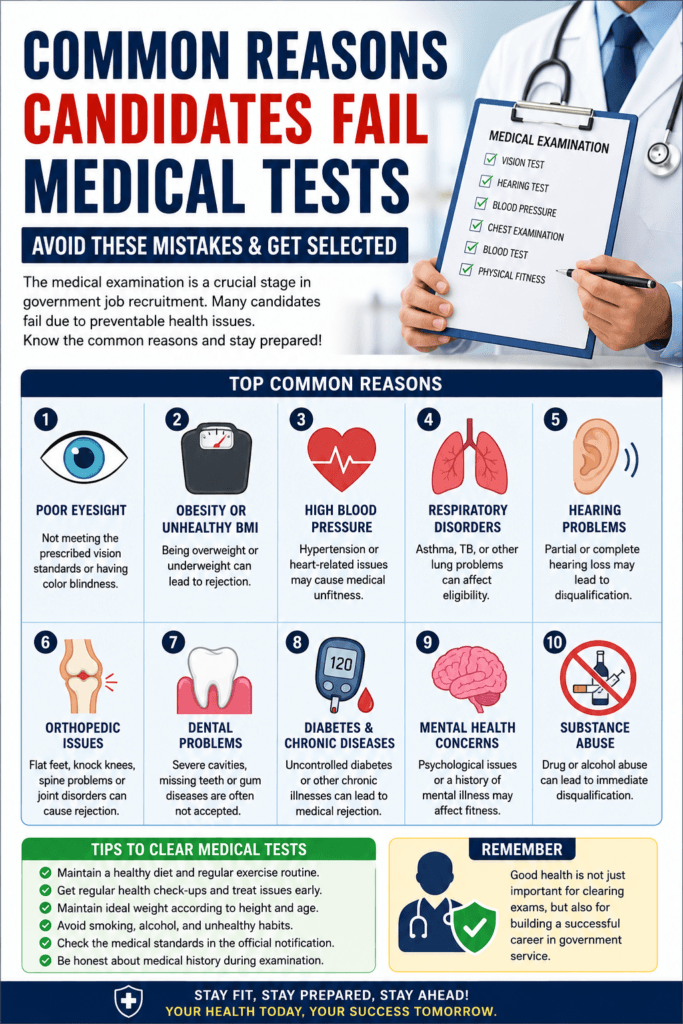
Thousands of candidates clear written exams, interviews, and physical tests every year, only to lose their dream government job during the final medical examination. Understanding the Common Reasons Candidates Fail Medical Tests can help aspirants avoid preventable mistakes and improve their chances of selection.
Many candidates wrongly assume that the medical test is a mere formality. In reality, government departments use medical examinations to ensure that candidates are physically and mentally capable of performing their duties. Whether you are applying for Railways, SSC, Police, Defence, PSU, or State Government jobs, knowing the Common Reasons Candidates Fail Medical Tests can save you from disappointment at the last stage.
In this guide, we break down the most frequent causes of medical rejection, explain department-specific concerns, and share practical strategies to help you clear the medical examination successfully.
What Happens During a Government Medical Test?
Before discussing the Common Reasons Candidates Fail Medical Tests, it is important to understand what recruiters actually check.
A standard government medical examination may include:
- General physical examination
- Height and weight assessment
- Vision testing
- Hearing evaluation
- Blood pressure check
- Chest and respiratory examination
- Orthopedic assessment
- Dental examination
- Laboratory tests
- Medical history verification
The exact standards vary depending on the post and department.
Top 10 Common Reasons Candidates Fail Medical Tests
1. Poor Eyesight
Vision-related issues remain one of the most common causes of rejection.
Recruitment boards often assess:
- Distance vision
- Near vision
- Color vision
- Night vision
- Eye diseases
Posts in defence, railways, aviation, and police services usually have strict eyesight requirements.
Common Problems
- High refractive error
- Color blindness
- Squint
- Retinal disorders
- Uncorrected vision below prescribed standards
2. Obesity or Unhealthy BMI
Candidates often focus only on exam preparation while ignoring physical fitness.
Medical boards compare height and weight to determine whether a candidate falls within acceptable limits.
Risks Associated with Obesity
- Reduced stamina
- Increased cardiovascular risk
- Lower physical efficiency
- Future health complications
Being severely underweight may also create concerns regarding fitness.
3. High Blood Pressure
Many candidates discover elevated blood pressure only during the recruitment medical examination.
Blood pressure can increase because of:
- Stress
- Anxiety
- Lack of sleep
- Excess caffeine
- Poor lifestyle habits
Persistent hypertension may result in temporary or permanent medical rejection depending on departmental standards.
4. Hearing Deficiencies
Government jobs involving communication and public safety require adequate hearing ability.
Medical officers may identify:
- Hearing loss
- Chronic ear infections
- Eardrum damage
- Balance-related ear disorders
Even minor hearing problems can affect eligibility for certain technical and operational posts.
5. Orthopedic Issues
Orthopedic problems are among the Common Reasons Candidates Fail Medical Tests in defence and police recruitment.
Examples include:
- Knock knees
- Flat feet
- Spine abnormalities
- Joint restrictions
- Limb deformities
These conditions may affect mobility, endurance, and operational performance.
6. Respiratory Disorders
Healthy lung function is critical for physically demanding jobs.
Medical boards commonly evaluate:
- Breathing capacity
- Chest expansion
- Respiratory history
Conditions that may create difficulties include:
- Severe asthma
- Chronic bronchitis
- Lung infections
- Unresolved tuberculosis complications
7. Dental Problems
Many candidates underestimate dental standards.
Common issues include:
- Multiple missing teeth
- Severe cavities
- Gum disease
- Jaw abnormalities
- Oral infections
Defence and uniformed services often maintain stricter dental requirements.
8. Diabetes and Chronic Diseases
Chronic illnesses may affect long-term job performance.
Medical boards carefully assess:
- Diabetes
- Thyroid disorders
- Kidney disease
- Liver disorders
- Neurological conditions
Controlled conditions may be acceptable for some posts, while others require stricter fitness standards.
9. Undisclosed Medical History
One of the most avoidable Common Reasons Candidates Fail Medical Tests is hiding medical information.
Candidates sometimes fail to disclose:
- Previous surgeries
- Serious injuries
- Long-term medication use
- Chronic illnesses
Medical boards often discover these issues during evaluation or document verification.
10. Substance Abuse –Common Reasons Candidates Fail Medical Tests
Recruiting authorities expect candidates to maintain healthy lifestyles.
Potential concerns include:
- Drug abuse
- Alcohol dependency
- Tobacco-related complications
- Prescription medication misuse
Substance-related health issues can lead to disqualification.
Which Government Jobs Have the Strictest Medical Standards?
Some jobs require exceptionally high fitness levels.
Defence Services
- Army
- Navy
- Air Force
Police Services
- State Police
- CAPF
- CISF
- CRPF
- BSF
Railway Safety Categories – Common Reasons Candidates Fail Medical Tests
- Loco Pilot
- Assistant Loco Pilot
- Station-related operational posts
Aviation and Technical Posts – Common Reasons Candidates Fail Medical Tests
- Air Traffic Control
- Aviation Operations
These positions often apply more rigorous medical standards than clerical or administrative jobs.
Common Myths About Government Medical Tests
Myth 1: Medical Tests Are Just Formalities
Reality: Many candidates are rejected every year due to medical reasons.
Myth 2: Spectacles Automatically Cause Rejection
Reality: Many jobs permit corrective lenses within prescribed limits.
Myth 3: Minor Health Issues Don’t Matter
Reality: Even small conditions may become significant depending on the job profile.
Myth 4: Medical History Can Be Hidden
Reality: Medical boards are trained to identify inconsistencies and undisclosed conditions.
How to Avoid Failing the Medical Examination
Understanding the Common Reasons Candidates Fail Medical Tests is only useful if candidates take action beforehand.
Schedule a Pre-Recruitment Health Checkup
A comprehensive medical examination can identify potential issues early.
Maintain Healthy Body Weight
Follow a balanced diet and exercise regularly.
Improve Cardiovascular Fitness
Walking, running, cycling, and swimming can improve overall health.
Get Your Eyes Checked
Consult an eye specialist if you plan to apply for posts with strict vision standards.
Manage Blood Pressure
Reduce stress, sleep properly, and maintain a healthy lifestyle.
Resolve Dental Problems
Treat cavities, infections, and gum issues before the official examination.
Keep Medical Documents Ready
Maintain records of surgeries, treatments, and ongoing medical conditions.
Frequently Asked Questions
Can I fail a government job after clearing all exams?
Yes. Medical fitness is often a mandatory stage of final selection.
Is obesity a reason for medical rejection?
Yes. Severe obesity may lead to disqualification in many government recruitments.
Does wearing spectacles affect eligibility?
Not necessarily. It depends on the vision standards prescribed for the post.
Are medical standards the same for every government job?
No. Each department sets its own medical requirements.
Can candidates appeal against medical rejection?
Many recruitment bodies provide review medical examination procedures.
Is color blindness disqualifying?
It depends on the nature of the job. Technical and safety-sensitive posts often require normal color vision.
Do previous surgeries affect selection?
Only if they impact current fitness or job performance.
How can I prepare for a government medical test?
Maintain good health, undergo preventive checkups, and review the official medical standards carefully.
Conclusion – Common Reasons Candidates Fail Medical Tests
The Common Reasons Candidates Fail Medical Tests are often preventable when candidates understand the requirements in advance. Poor eyesight, obesity, high blood pressure, hearing issues, orthopedic conditions, respiratory disorders, chronic illnesses, and undisclosed medical history account for a large percentage of medical rejections. By focusing on overall health, maintaining proper fitness, and addressing medical concerns early, aspirants can significantly improve their chances of clearing the final stage of government recruitment.
Related Guides:
- Government Job Medical Standards Explained
- Height and Weight Requirements for Government Jobs
- How to Prepare for Physical Efficiency Tests
- Complete Guide to Government Job Eligibility Criteria
This structure is more SEO-focused, keeps the focus keyword prominent, and is closer to the type of evergreen content that ranks for long-tail government-job searches.
