Government Employee Leave Rules in India 2026
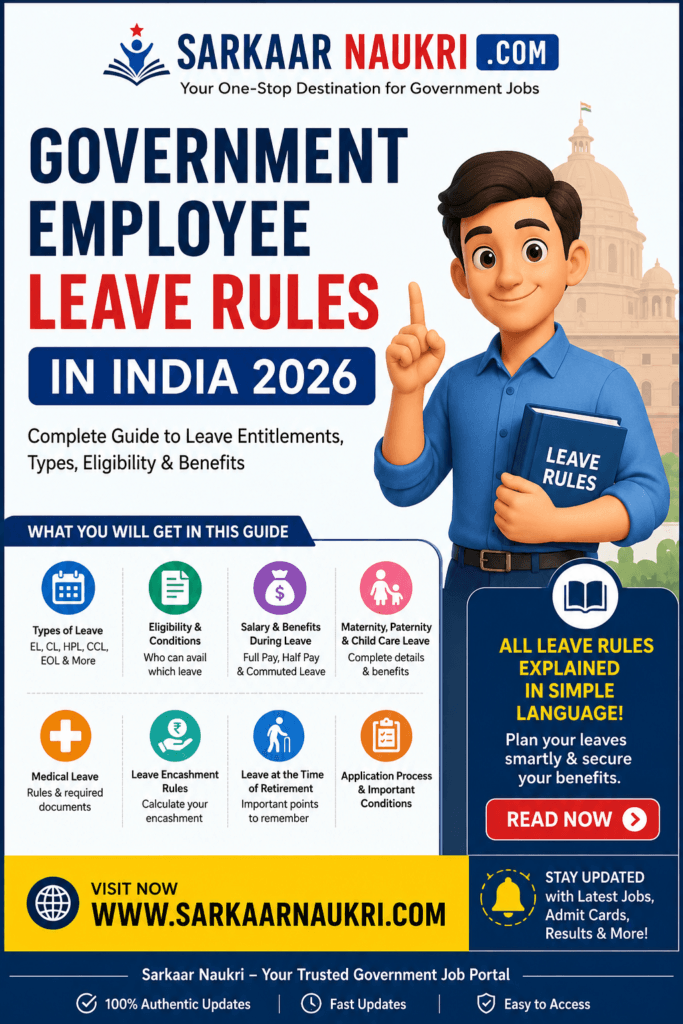
Government employee leave rules are an important part of public service in India. Every central and state government employee is entitled to various types of leave during service. These leave provisions help employees maintain a healthy work-life balance, address medical emergencies, fulfill family responsibilities, and ensure adequate rest.
The leave system for Central Government employees is primarily governed by the Central Civil Services (Leave) Rules, 1972 (CCS Leave Rules). Different state governments may have separate service rules, but the overall framework remains similar.
In this detailed guide, we explain all major government employee leave rules, including earned leave, casual leave, half pay leave, child care leave, maternity leave, paternity leave, leave encashment, and other important provisions.
What Are Government Employee Leave Rules?
Government employee leave rules are official regulations that define the following:
- Types of leave available
- Eligibility criteria
- Leave accumulation limits
- Salary admissibility during leave
- Leave encashment provisions
- Medical leave benefits
- Retirement-related leave benefits
These rules ensure that employees can take time off without losing employment benefits while maintaining administrative efficiency.
Types of Leave Available for Government Employees: Leave Rules
Government employees may be eligible for several categories of leave.
1. Earned Leave (EL)
Earned leave is one of the most valuable leave benefits available to government employees.
Key features of government employee leave rules:
- Earned through continuous service.
- Can be used for personal purposes, vacations, family events, or emergencies.
- Leave can accumulate over time.
- Unutilized leave can often be encashed at retirement.
Central Government civilian employees generally earn leave at prescribed rates under CCS Leave Rules.
Benefits of Earned Leave
- Full salary during leave.
- Can be planned in advance.
- Useful for long vacations.
- Eligible for leave encashment in many cases.
2. Casual Leave (CL)
Casual Leave is intended for short-term personal requirements.
Common reasons include:
- Personal work
- Family functions
- Urgent matters
- Short medical issues
Casual Leave is generally not treated as a formal leave account and is intended for brief absences from duty. Government offices commonly prescribe annual limits.
Features of Casual Leave
- Short-duration leave.
- Usually cannot be combined extensively with other leave categories.
- Prior approval is generally required.
3. Half Pay Leave (HPL)
Half Pay Leave is earned throughout service and may be utilized for medical or personal reasons.
Important features:
- Earned at prescribed rates every year.
- Salary is paid at half-pay rates during the leave period.
- Can be converted into Commuted Leave under specified conditions.
Half Pay Leave forms an important component of government service benefits.
4. Commuted Leave
Commuted Leave allows employees to receive full pay while utilizing Half Pay Leave balance.
Features include:
- Granted on medical grounds and certain approved circumstances.
- Debited at twice the rate of Half Pay Leave.
- Full salary may be admissible during the leave period.
This provision is particularly useful during prolonged illness or hospitalization.
5. Maternity Leave
Female government employees are entitled to maternity benefits under applicable service rules.
Major benefits include:
- Paid leave for childbirth.
- Protection of employment during leave.
- Continuity of service benefits.
- Salary and allowances as per rules.
Maternity Leave helps ensure proper care for both mother and child during the post-delivery period.
6. Paternity Leave
Male government employee leave rules may receive Paternity Leave following the birth of a child.
Objectives include:
- Supporting the spouse after childbirth.
- Assisting with childcare responsibilities.
- Strengthening family support during the early stages of parenting.
Paternity Leave provisions vary depending on applicable service rules.
7. Child Care Leave (CCL)
Child Care Leave is among the most employee-friendly provisions available to government servants.
CCL may be used for:
- Child education
- Examinations
- Health-related needs
- Childcare responsibilities
Recent judicial interpretations have emphasized that child care leave exists to support legitimate childcare requirements under the CCS framework.
Benefits of Child Care Leave
- Helps working parents manage family responsibilities.
- Supports children’s educational needs.
- Available under specific eligibility conditions.
8. Extraordinary Leave (EOL)
Extraordinary Leave is granted when no other leave is available.
Characteristics include:
- Usually granted without pay.
- Service continuity may be protected.
- Used in exceptional situations.
Employees often utilize EOL when other leave balances are exhausted.
9. Study Leave
Study Leave may be granted to eligible government employees for:
- Higher education
- Professional development
- Specialized training
- Research activities
The objective is to improve professional skills and enhance administrative efficiency.
Medical Leave Rules for Government Employees
Medical leave provisions are among the most important aspects of government employee leave rules.
Employees may receive leave for:
- Illness
- Surgery
- Hospitalization
- Recovery periods
- Long-term medical treatment
Medical certificates from authorized medical authorities may be required depending on the duration and type of leave requested.
Leave Encashment Rules
Leave encashment is one of the most valuable retirement benefits available to government employees.
Under leave encashment provisions:
- Unused leave can be converted into monetary benefits.
- Encashment may be available at retirement.
- Certain LTC-related encashment benefits may also apply.
The overall encashment ceiling for eligible leave categories can extend up to prescribed limits under government rules.
Advantages of Leave Encashment
- Additional retirement benefit.
- Tax advantages in specified cases.
- Reward for efficient leave management.
Government employees retiring from service are generally entitled to favorable tax treatment on eligible leave encashment benefits.
Leave During Retirement
Employees nearing retirement should carefully review leave balances.
Important considerations include:
- Leave preparatory to retirement.
- Earned Leave utilization.
- Leave encashment eligibility.
- Pension implications.
Proper planning can help maximize retirement benefits and ensure a smooth transition from service.
Important Conditions While Applying for Leave
Government employees should remember:
- Leave is not an automatic right.
- Prior approval is generally required.
- Medical leave may require supporting certificates.
- Employees should maintain adequate leave balances.
- Unauthorized absence can attract disciplinary action.
Following official procedures helps avoid service-related complications.
Benefits of Government Employee Leave Rules
The Government Employee Leave Rules provide several advantages:
- Better work-life balance.
- Financial protection during absence.
- Medical security.
- Family support benefits.
- Childcare assistance.
- Retirement benefits through leave encashment.
- Improved employee welfare.
These benefits contribute significantly to the attractiveness of government employment in India.
Frequently Asked Questions (FAQs) Government Employee Leave Rules
What is earned leave for government employees?
Earned Leave is leave accumulated through service and can be used for personal purposes while receiving full salary.
What is half-pay leave?
Half pay leave is earned leave that provides leave salary at half-pay rates and may be used for medical or personal reasons.
Can government employees encash unused leave?
Yes. Eligible employees can receive leave encashment benefits subject to applicable rules and limits.
What is Child Care Leave?
Child Care Leave allows eligible employees to care for children for educational, health, and other approved purposes.
Is maternity leave available to government employees?
Yes. Eligible female government employees are entitled to maternity leave under applicable service rules.
Conclusion
Government employee leave rules play a vital role in ensuring employee welfare and administrative efficiency. From Earned Leave and Casual Leave to Child Care Leave, Maternity Leave, Medical Leave, and Leave Encashment, the system provides comprehensive support throughout an employee’s career.
Understanding these provisions can help government employees effectively plan vacations, manage emergencies, support family responsibilities, and maximize retirement benefits. Employees should always refer to the latest departmental instructions and service rules applicable to their organization before applying for any leave.
